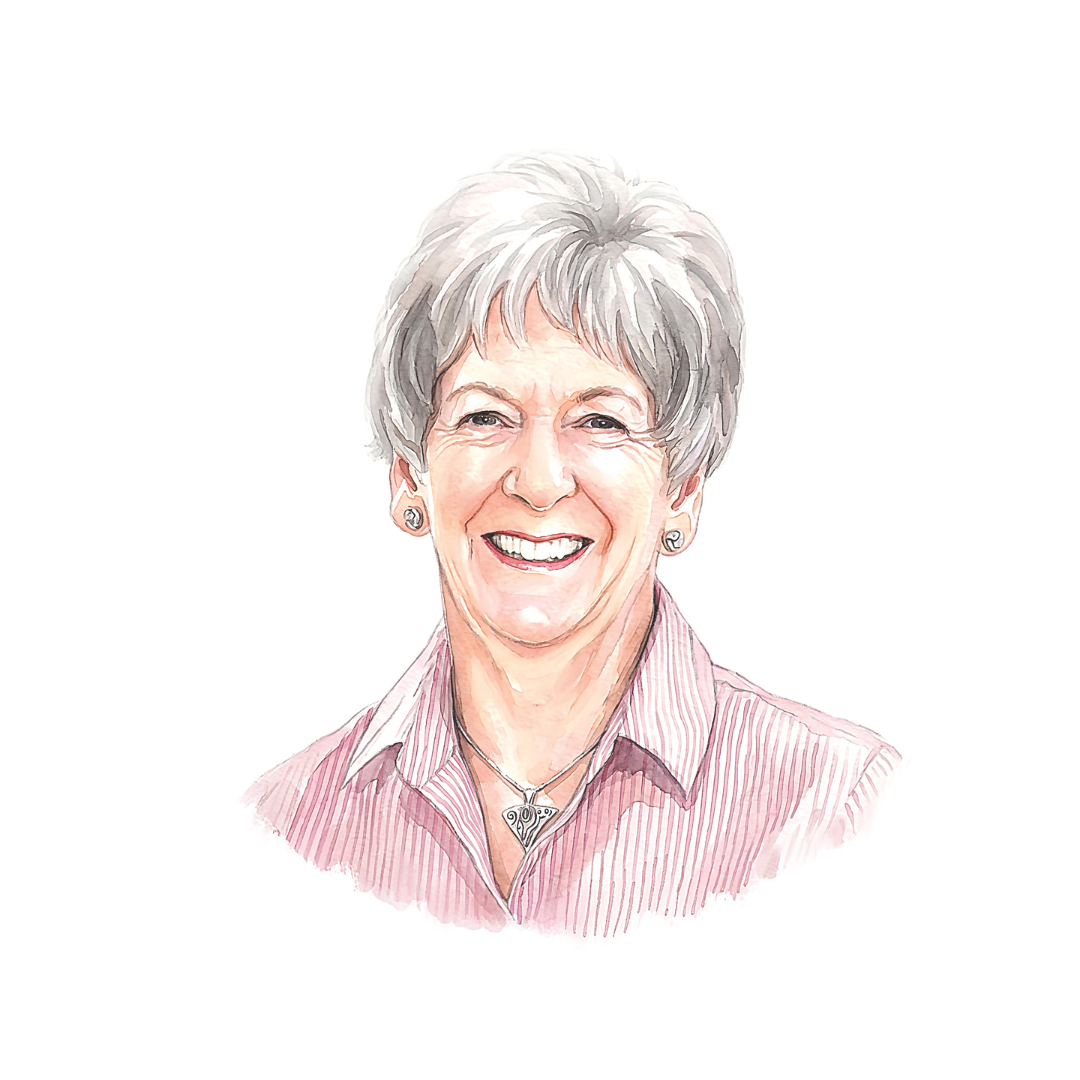
By Dr. Margaret Leggat AM.
When I founded the Schizophrenia Fellowship of Victoria in 1978, I was responding to the issues I saw in front of me. I saw families in crisis, people suffering in silence and flawed systems (medical, social and political) that meant the most dignified response to mental illness was to pretend it wasn’t happening.
I trained as an occupational therapist and had worked in a psychiatric hospital in Melbourne before completing a PhD in Sociology at Monash. The sociologists of the time were saying, astonishingly, that mental illness didn’t exist, that it was a construct, a label. I understood they were trying to destigmatise it, which in principle was not a terrible idea, but in practice it was catastrophic. People came to me distressed and furious. They told me the denial was damaging them because now they couldn’t access the help they needed. So I did something about it.
The Fellowship took off like wildfire. Within a few years we had something like 3,000 members in Victoria alone. Support groups were meeting across the state – this was the only way people could connect back then because there were no computers. People showed up and talked to each other, and in those rooms people discovered they weren’t alone, which was remarkable. They learned from each other and began to find their way back. I now understand that was joy in its most elemental form. Not happiness exactly, but the profound relief of connection and being seen and understood by someone who truly gets it. When the demands on me became unmanageable, a consultant told me something that seemed, at the time, deranged: I needed to start another organisation. I told him he was crazy, but he was right. Alongside the on-the-ground support work, we needed something national and independent. An organisation that could take on stigma at the level of culture itself, go directly to governments, and speak with courage. That was how SANE Australia came to be. The stigma we faced was staggering. I was berated by a psychiatric nurse for daring to speak publicly about schizophrenia, [The College of Psychiatrists] told me I was making things worse, but we couldn’t go on as we were.
The Australian writer, broadcaster and filmmaker, Anne Deveson, changed everything. She had a son with schizophrenia and she said, “we are going to talk about this”. Because Anne had such a public profile, her willingness to say the word ‘schizophrenia’ out loud had an enormous impact. Her book, Tell Me I’m Here, which told the story of how her son felt he didn’t exist, ended up on the reading lists of university students across Victoria. Entire cohorts of young people were being asked to understand what a family living with schizophrenia actually looked like.
We organised street marches down Swanston Street, and some days more than 100 people joined us to say “we are here, we’re talking about this and we’re not going away”. And underneath all of it was the conviction that the people we were fighting for deserved, like anyone else, to build a meaningful, joyful life.
One of the most extraordinary moments of my career came at a public forum I held in Melbourne. A man named Simon Champ was in the room. Suddenly, Simon stood up and said: “I want to say that I have schizophrenia”. You could have heard a pin drop, and then the entire room rose to its feet. Simon went on to do marvellous things. He has periods where he has to return to hospital, when, as he puts it, his brain starts to play tricks on him. People with complex mental illness can get the treatment and support they need, and get back to university, back to their employment, back to their families and communities and creative lives.
What I understood then, and believe more deeply now, is that you cannot learn about complex mental illness from a list of symptoms in a textbook. You learn from listening to people with lived experience. The poet Sandy Jeffs, who has written so beautifully and bravely about her own experience of schizophrenia, talks about what she calls “Team Sandy” – the network of friends and supporters who help her live a full and rich life. The things Sandy does never cease to amaze me, and that’s what good support makes possible. Forty years on, what worries me most is not the ground we haven’t gained, it’s the ground we’ve lost. The public conversation went quiet for a while,face-to-face contact diminished and those critical support groups became harder to sustain. And with that, I fear we’ve lost some of the ordinary joy of just being known by another person.
But I’m not without hope. SANE’s digital support services are extraordinary, reaching people in regional areas, at times of night when no one else is available, and crucially, reconnecting them with their communities. A book I recently co-authored, Living with Schizophrenia, has sold in numbers that have astounded me. People aren’t talking about it face-to-face as much as they used to, but they’re reading and perhaps that, too, is a beginning. I want SANE to continue to keep us talking, and help make it understood, beyond argument, that complex mental illness is treatable and that a full, joyful life with schizophrenia is not only possible, but the goal.
When you help someone manage their mental illness, you also save governments vast amounts of money. I did a study that looked at the cost of supported housing and it was minimal compared to the cost of vulnerable people being homeless involved with the police and in and out of psychiatric hospitals. But that’s an argument for the politicians. For the rest of us, we need to decide if we, as a community, support every person’s right to feel that they are seen and heard. That their life has meaning and purpose and moments of real delight. That is what we have been working towards for forty years.
In the meantime, I find my own joy in my eight magnificent grandchildren, in the book I still want to write, in the conviction that if we keep speaking clearly, honestly and publicly, that things can change. As Anne Deveson said all those years ago, let’s talk about it. We must.
Dr Margaret Leggatt AM is co-founder and patron of SANE Australia. She is the co-author of Living with Schizophrenia. SANE Australia provides free mental health support, information and referral to people affected by complex mental illness.
sane.org