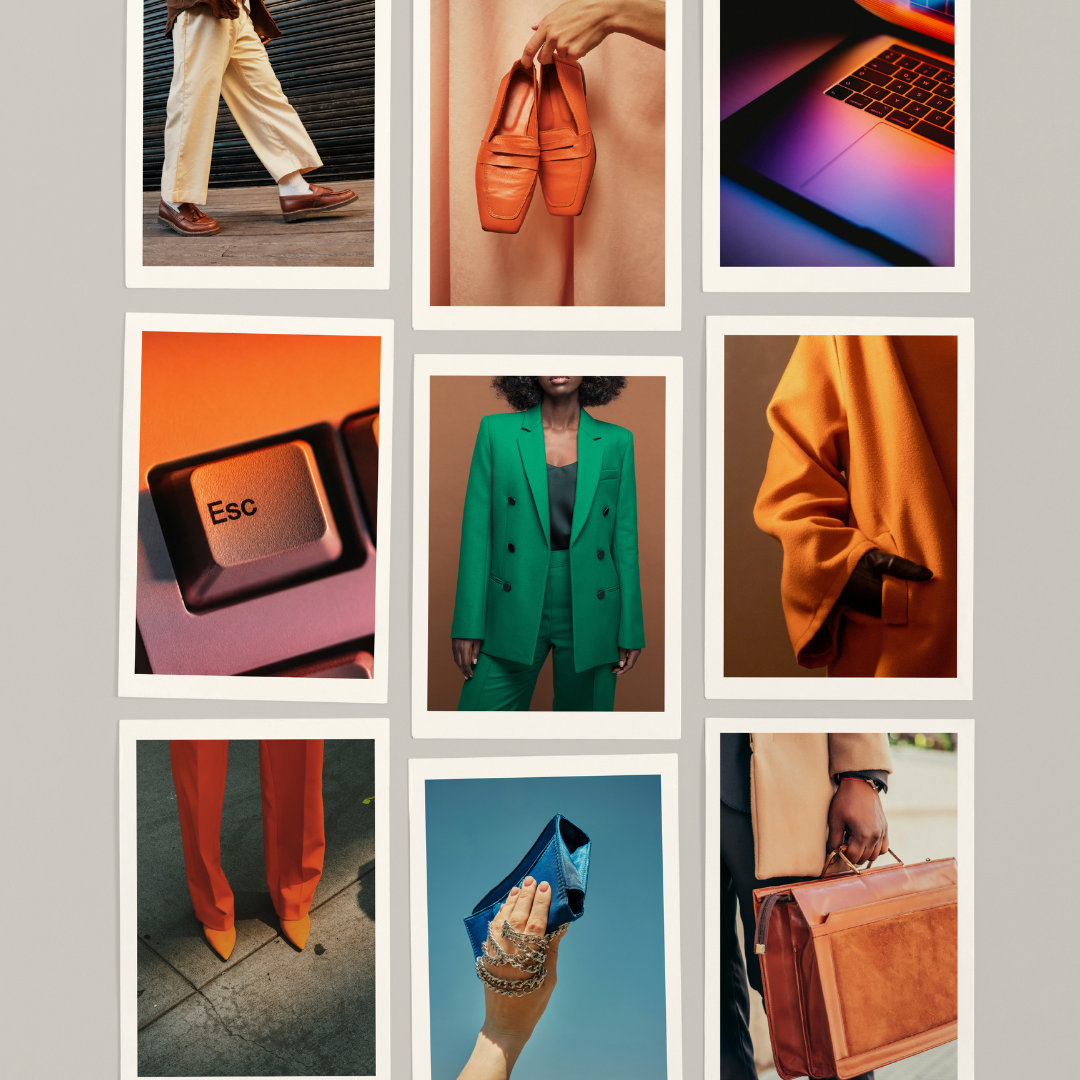
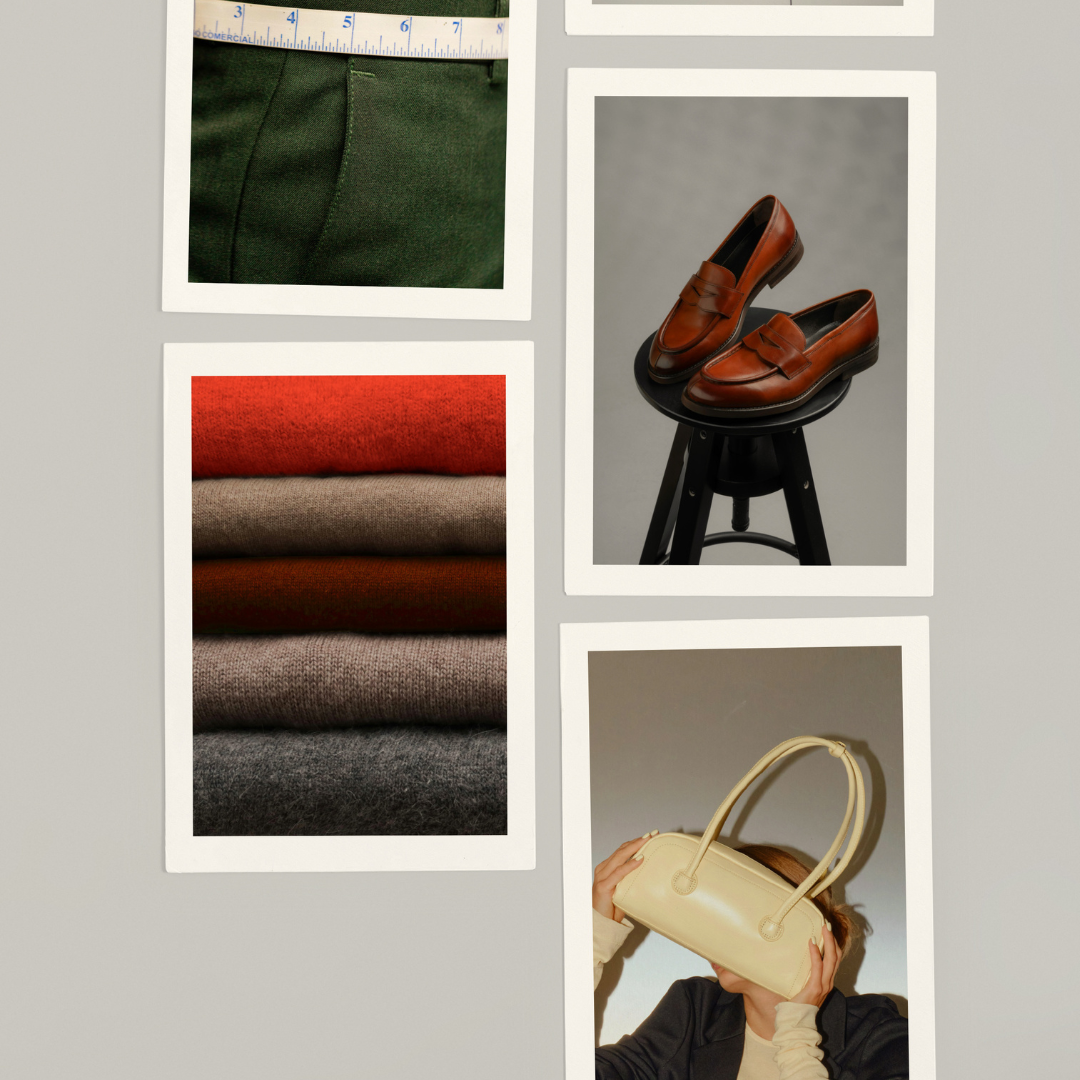
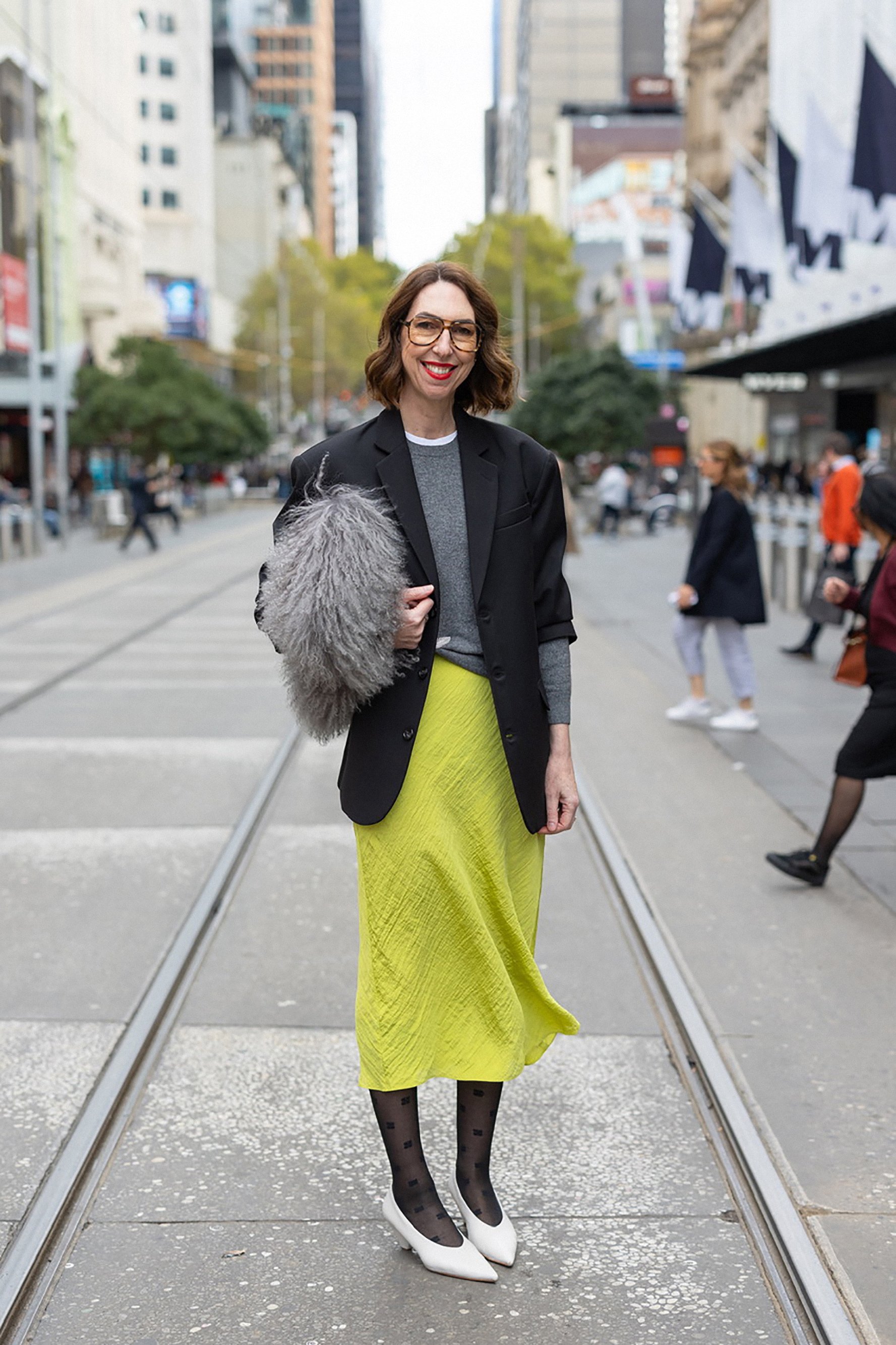
In the corridors of corporate Australia, change is in the air. Walk through the lobby of 101 Collins on any given morning and you might notice a teal blazer, an unexpected kitten heel in shades of rust and amber, a beautifully-cut olive green suit with a coordinating pocket square that would have seemed unthinkable here five years ago. The corporate wardrobe, long the domain of navy, black and the occasional brave grey, is having a renaissance. And according to Melbourne-based stylist Sally Mackinnon, it’s about time.
“If you’re working in a corporate office environment right now, your choice for colourful, interesting workwear is really broad,” she says. “That didn’t exist before.”
Mackinnon, whose styling work spans senior executives to recent graduates stepping into their first professional roles, has had a front-row seat to one of the more interesting shifts in recent fashion history. Post-pandemic, she says, the boundaries between workwear and everyday fashion began to blur. People started wearing their ‘real’ clothes to the office, and the suit – freed from its strict, corporate context – started appearing in new colours and silhouettes.
The great dress code reset
To understand where we are, it helps to understand where we’ve been. The 1980s gave us power dressing, with shoulder pads, structure, and the suit as a form of armour. The 1990s stripped it back to a kind of austere minimalism. Then came the long, slow casualisation of the early 2000s, which was then accelerated dramatically, of course, by the pandemic. Suddenly people who’d spent twenty years mastering corporate dressing found themselves completely at sea with a wool pencil skirt in one hand and a leather bomber jacket in the other. “People knew how to do corporate,” says the cheerfully frank Mackinnon. “All of a sudden the workplace changed, the environment changed, they were allowed to wear jeans or sneakers or be a bit more relaxed, and people didn’t know how to do that.”
The result, she says, was years of helping clients navigate what she calls “the in-between.” Neither formal nor casual, it’s the register most of us find difficult: smart enough for the office, relaxed enough not to feel ridiculous on a Friday afternoon.
Now, the pendulum is swinging back. Many of Mackinnon’s clients are in workplaces now operating a “dress for your day” policy, which is a
refreshingly sensible approach where you look at your calendar each morning and dress accordingly. While a client presentation might call for tailoring, a day at your desk can be a little more relaxed. It
sounds obvious, but Mackinnon says it’s had an unexpectedly liberating effect, with her clients enjoying the chance to dress up when the occasion calls for it, rather than being forced into a starched uniform whether it’s relevant for their tasks or not.
“I think people are actually looking for that effort again,” she says. “For the days they’re going to the office, they’re really striving to present themselves as curated and well-dressed.”
Enter the colour suit
Ten years ago, Mackinnon’s corporate clients were largely buying navy, grey and black suits. Today, she’s helping the same clients into olive green, cornflower blue, taupe and coral, colours that are still versatile and appropriate for a 9am meeting, but also communicate something about the person wearing them.
“Suiting has become a fashion item,” says Mackinnon. “And when you think about a coloured suit that you can wear with sneakers on a casual day and as separates on the weekend, suddenly you’re buying something that works across your whole life.”
The practical implications of this approach are significant, particularly for younger professionals building their wardrobes from scratch. The old model of a conservative work wardrobe kept entirely
separate from your real life no longer makes financial sense. The pieces you reach for at work on a Tuesday should ideally be the pieces you’re reaching for in some configuration on Saturday. The key is choosing well.
Small moves, big impact
Not everyone is ready to walk into a boardroom in a pistachio blazer, and Mackinnon is pragmatic about that. For those who want to start smaller, she has a deceptively simple suggestion: change your shoes.
“Consider a pair of corporate shoes that aren’t black,” she says. “White, cream, red, chocolate brown, burgundy – just not black. Even if you’re wearing a black suit, a different shoe creates a point of difference in an instant.” Beyond shoes, Mackinnon’s styling philosophy comes down to one disciplined minute in front of a full-length mirror before you leave the house. “Ask yourself a few questions,” she says. “Is everything cohesive? Would pushing the sleeves of your jacket up add just enough ease? Should the shirt be tucked or untucked?”
The other rule Mackinnon returns to again and again is the high-waist. Whether it’s a trouser, a skirt or wide-leg tailoring, sitting at the waist rather than the hip transforms proportions immediately.
“A high-waisted trouser with a shirt or top tucked in just works. You don’t have to wear heels, you don’t have to do anything else. It’s done.”
What your clothes say before you speak
Underlying all of this is a bigger idea that connects the practicalities of hemlines and heel heights to something more interesting. The question Mackinnon encourages her clients to ask every morning is not “Does this look good?” but “Does this say
what I want it to say?” For a younger professional who wants to be
taken seriously, that might mean swapping a casual shoe for something slightly more elevated. For someone who wants to project warmth and
approachability, it might mean softening an otherwise sharp silhouette with a fluid fabric or an unexpected colour. The point is that dressing is communication, and your wardrobe is a tool.
“Your outfit should project the person you want to be in the room before you’ve even opened your mouth,” she says. “That doesn’t mean dressing to look thinner or taller or any of that sort of thing.
It’s just: do you feel the way you want to feel?”
––
Sally’s tips for a wardrobe that works harder:
1. A great tailored suit in a colour you love
Not navy, not black, unless that’s your thing. A matching blazer and trousers in a colour that you really feel great in will be more versatile than you expect, work across more of your life, and make getting dressed a lot more interesting. As long as you’re within your budget, the fit matters far more than the price tag.
2. Five white T-shirts
A great basic tee is the workhorse that holds everything else together, and the one item that’s always worth spending a little extra on. When structured, not sheer, and worn under a blazer, a white T-shirt looks polished enough for almost any meeting and provides a clean canvas for everything else. Outside of work, you can take
the blazer off, add a few necklaces or a casual button down shirt, and you’re done.
3. A second ‘bottom’
A pair of tailored trousers is critical and the number one piece for the bottom half of your outfits. Secondary pieces, such as a fluid midi skirt, a well cut dress or a chino pant should be somewhat adjacent. Everything should be able to talk to everything else, that’s how you achieve versatility.
4. A refined, elevated shoe
Heels are not compulsory but a kitten heel is comfortable, modern and eternally stylish. It’s the shoe that pulls the whole wardrobe
together. When you choose a colour other than black, it will change the whole feeling of an outfit instantly. Otherwise, consider a dress shoe in a deep tan or chocolate brown. This is the one shoe that will work across everything from your business suit to jeans on casual Fridays.
5. A fine-knit long-sleeve top
A step up from a basic cotton long-sleeve, a well-cut, crew neck knit in a neutral or complementary tone works under a blazer, with tailored skirts and trousers, or worn alone. These are versatile enough to carry you through the cooler months and considered enough to hold its own without a jacket over it.
6. A non-black accessory
Be it shoes, a belt, a bag or jewellery, choose at least one that isn’t default black. A belt in a warm tan, a patterned neck scarf, even a pair of colourful socks can lift an outfit from functional to intentional. Accessories are the fastest, lowest-risk way to introduce colour and personality.
Sally Mackinnon is a Melbourne-based personal stylist.
Styled by Sally styledbysally.com.au